Gallery Blog Post Examples
These are examples only — three posts, one per template. Real data from approved gallery entries.
TEMPLATE A — Full Case Study
Entry: b7a4b6ce | Double cover-up, upper arm, 10 sessions, complete removal
title: "Double Cover-Up Black Tattoo Completely Removed in 10 Sessions ($2,000)" slug: "black-upper-arm-double-coverup-complete-removal-10-sessions" date: "2026-05-24" description: "A double cover-up black tattoo on the upper arm reached complete removal after 10 sessions and 2.5 years, using a Cutera Enlighten laser. Total cost: $2,000.
Congrats to Erasable Med Spa for this result 👏"
gallery_entry_id: "b7a4b6ce-6d90-4bcc-aa85-4f9b94a3dd3f" template: "A" tags: ["black-ink", "upper-arm", "complete-removal", "cutera-enlighten", "cover-up", "type-ii-skin"] featured_image: "https://fhpcczdjkqkaentjcrck.supabase.co/storage/v1/object/public/before-after-images/1778850008574-fa1aktoadxc.webp"
Double Cover-Up Black Tattoo Completely Removed in 10 Sessions ($2,000)
A medium black tattoo on the upper arm, a double cover-up that had been covered up twice, reached complete removal after 10 sessions at Erasable Med Spa. Total cost was $2,000 over 2.5 years, treated with a Cutera Enlighten laser.
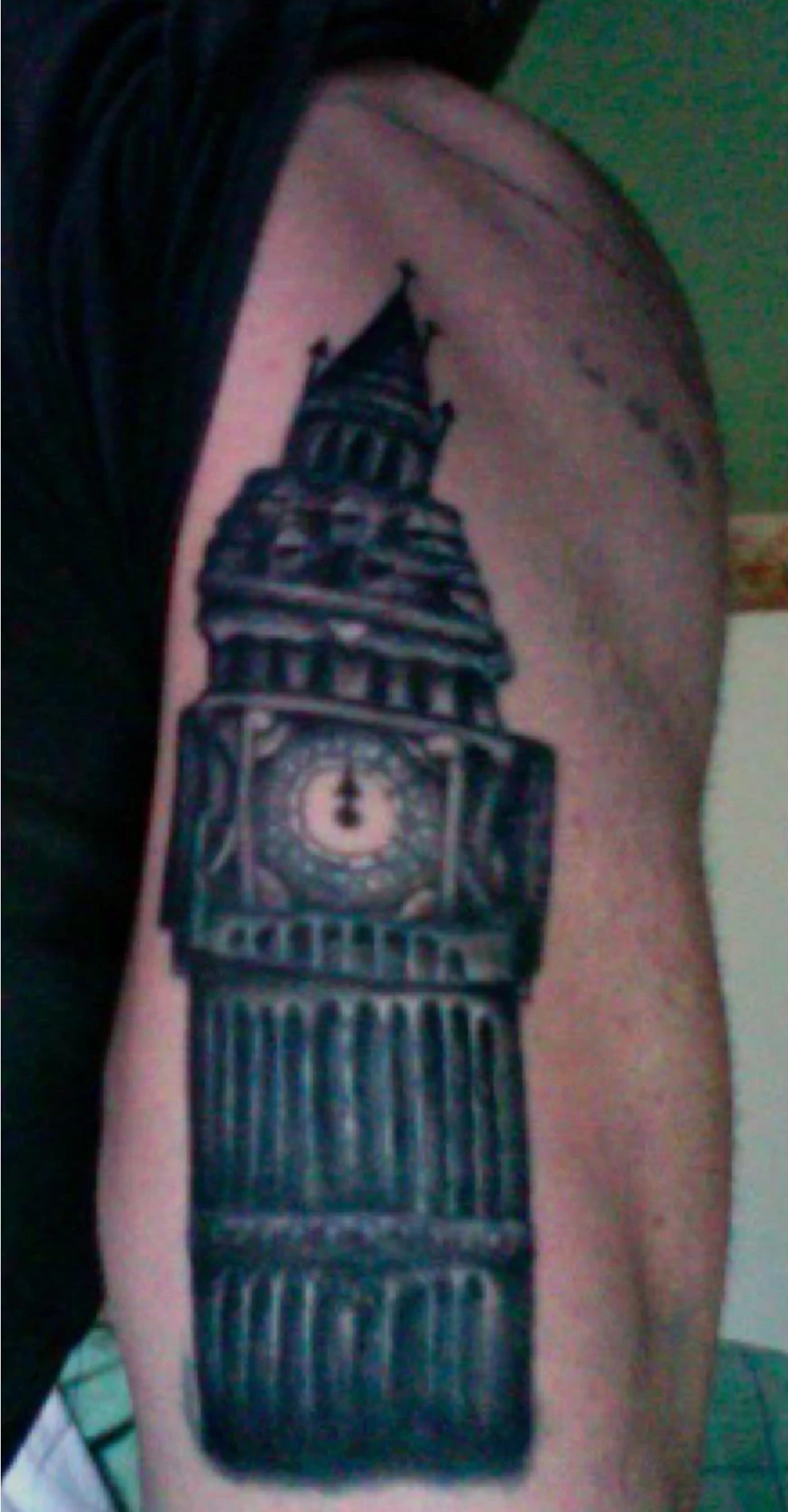
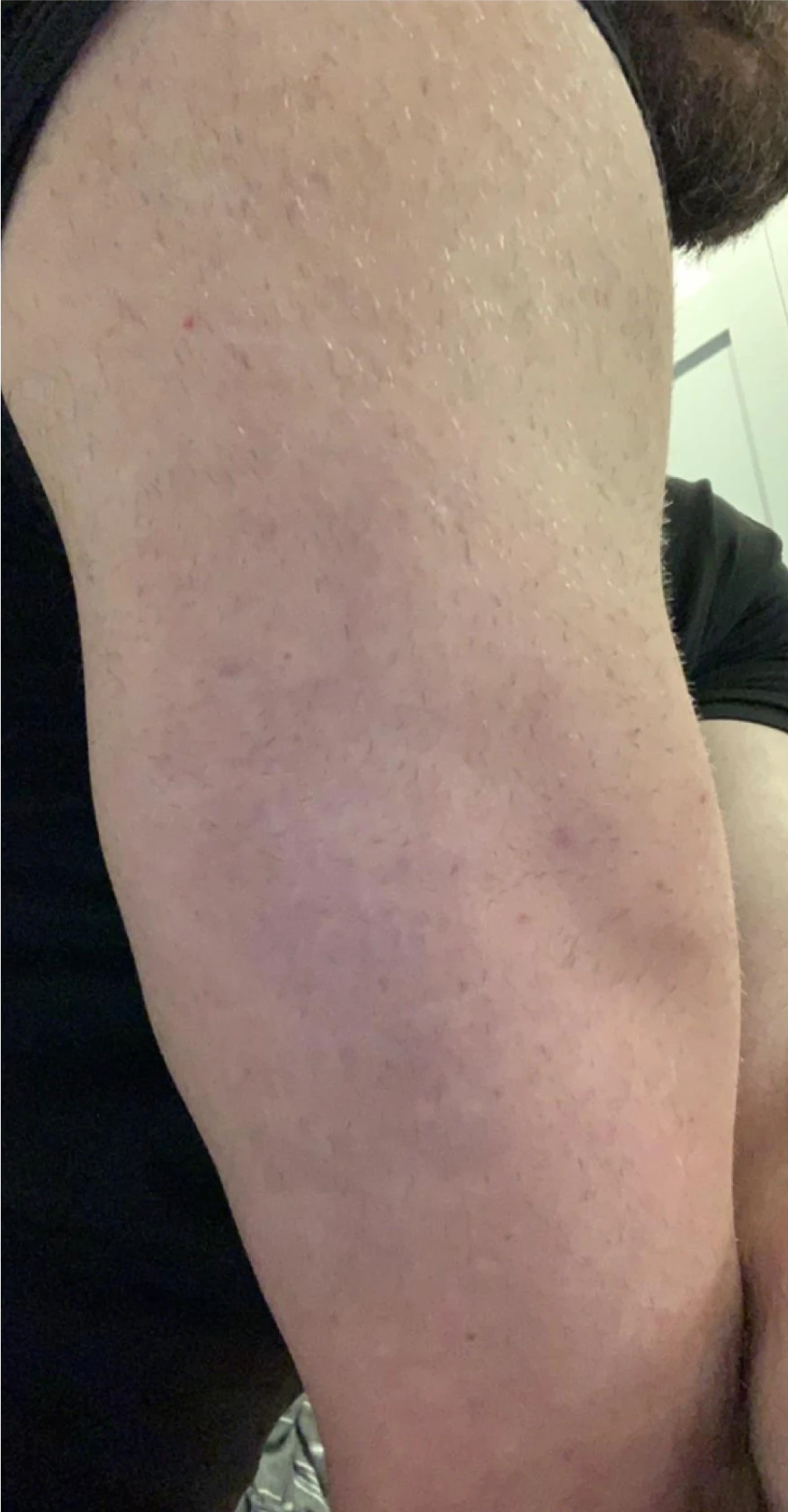
Before (session 0) and after complete removal (session 10) at Erasable Med Spa.
The tattoo
This was not a straightforward single-layer removal. The piece had been reworked twice over 8 years, meaning the skin held multiple layers of black ink at different depths. Cover-up tattoos typically contain roughly twice the ink volume of a fresh design, since each rework adds density to conceal what came before. That makes the 10-session total, while above average for a medium tattoo, actually on the lower end of what double cover-ups typically require.
The location helped. The upper arm has good lymphatic drainage and sits close to the torso lymph nodes, which means the body can flush cleared ink particles more efficiently than it can from extremities like the hands or feet. Fair skin (Fitzpatrick Type II) also means the laser could be applied at higher energy settings without risk of pigmentation changes.
The laser
The Cutera Enlighten is a hybrid pico and nanosecond platform operating at 1064nm for black ink. For this case — dense black ink on fair skin — 1064nm is the right wavelength regardless of which platform delivers it. The result is what matters: complete removal in 10 sessions on a tattoo that had been covered up twice.
The timeline
10 sessions at 8-week intervals accounts for roughly 80 weeks of active treatment. The total reported duration was 2.5 years (around 130 weeks), which means there were gaps between some sessions, likely scheduling pauses or longer recovery periods toward the end when fading slows and sessions feel less urgent. The last 5 to 10% of clearance is the hardest part of any removal: the ink that survived the first several passes tends to be deepest and most encapsulated.
The cost
$2,000 across 10 sessions works out to $200 per session. Reputable removal providers typically charge $350 to $700 per session. At $200, Erasable Med Spa was almost certainly selling this as a package rather than billing per visit, which is how per-session rates drop significantly when you commit upfront.
If you have a similar tattoo (black ink, double cover-up, upper arm, fair skin), this case is a useful benchmark. Cover-up tattoos carry roughly twice the ink of a single-layer design, so expect more sessions than the typical 8 to 12 for a standard black tattoo. Budget accordingly if yours is larger or more saturated.
See the full before and after photos in the gallery
TEMPLATE A — Full Case Study (laser switch mid-treatment)
Entry: 82e76f3f | Small shoulder, 5 sessions over 5 years, laser switch, 75% fading
title: "Small Black Shoulder Tattoo: 75% Fading After 5 Sessions Across Two Different Lasers ($1,000)" slug: "black-shoulder-tattoo-5-sessions-laser-switch-75-percent" date: "2026-05-24" description: "A small black shoulder tattoo faded 75% over 5 sessions and 5 years at Fading Fast. Treatment involved a switch from Candela PicoWay to Quanta Q-Plus C mid-way through." gallery_entry_id: "82e76f3f-991c-4c22-9311-f29003bfe187" template: "A" tags: ["black-ink", "shoulder", "picoway", "quanta-q-plus-c", "laser-switch", "type-i-skin"] featured_image: "https://fhpcczdjkqkaentjcrck.supabase.co/storage/v1/object/public/before-after-images/1bd0fyw_session5_1776758327844.webp"
Small Black Shoulder Tattoo: 75% Fading After 5 Sessions Across Two Different Lasers ($1,000)
A small black tattoo on the shoulder reached 75% fading after 5 sessions over 5 years at Fading Fast, with one notable variable: the laser changed mid-treatment, from Candela PicoWay to a Quanta Q-Plus C. Total cost was $1,000.
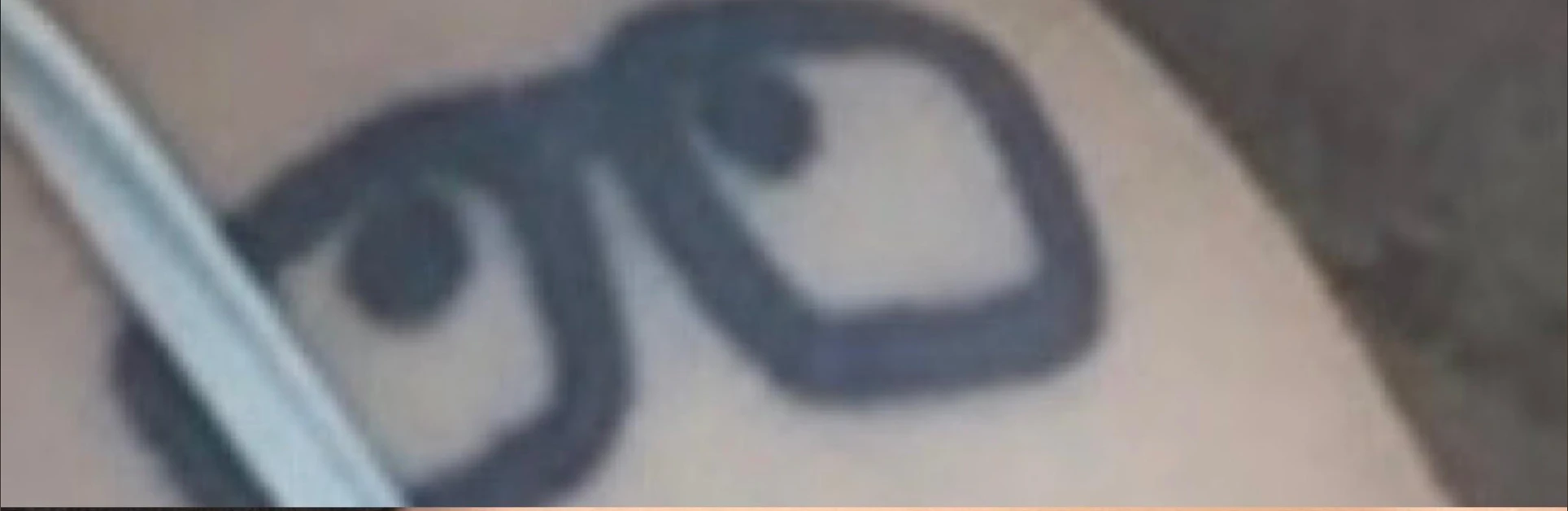
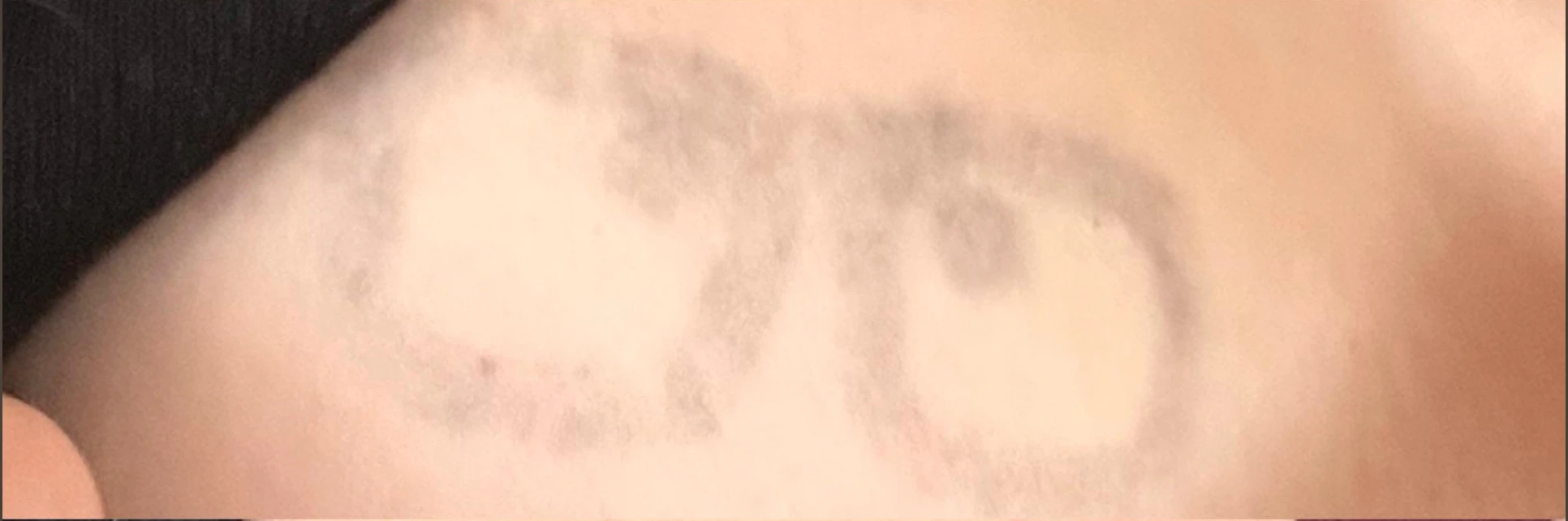
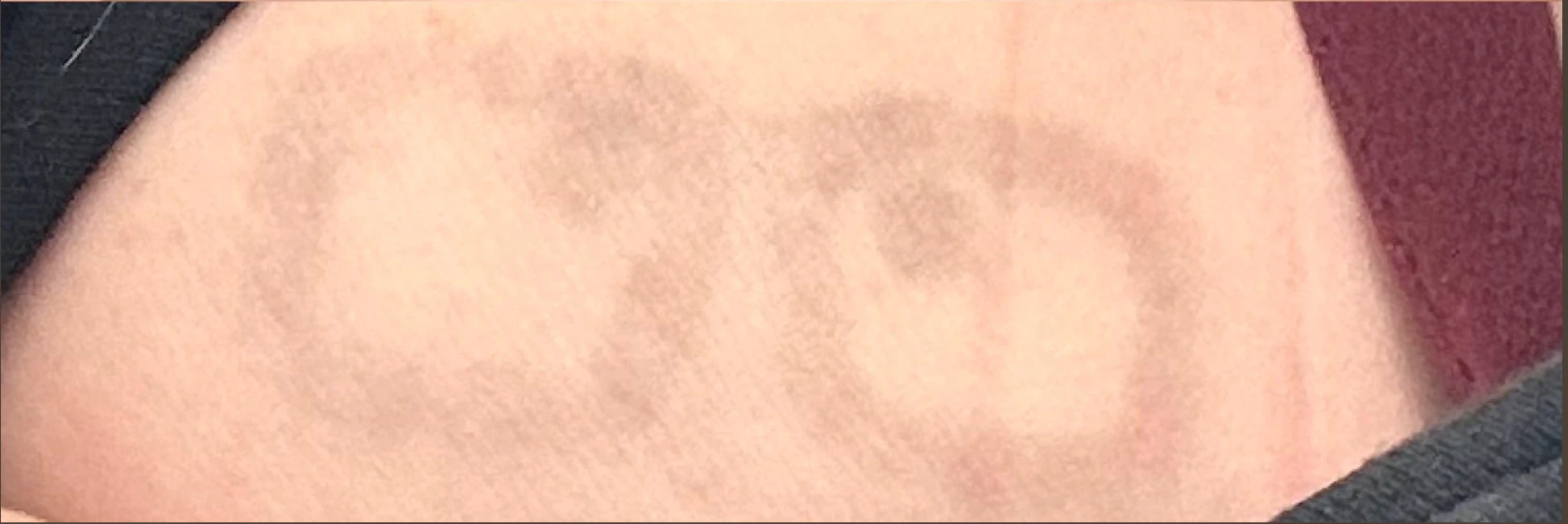
Session 0 (before), session 4, and session 5. Significant fading, with residual ink still present.
The tattoo
Small black ink on the shoulder, 5 to 10 years old when treatment started on Fitzpatrick Type I skin (very fair, always burns in the sun). Those conditions are favorable for removal. The shoulder has reasonable lymphatic access, Type I skin allows for aggressive laser settings without significant risk of pigmentation changes, and older ink tends to break down faster because the macrophages that hold it have already begun dispersing it over time.
Given those conditions, 75% fading after 5 sessions over 5 years is slower progress than you would expect. The answer is probably in two places: the very long interval between sessions, and the laser switch.
The laser switch
Sessions 1 to some point were done with Candela PicoWay. Then the clinic switched to Quanta Q-Plus C, a nanosecond Q-switched laser. PicoWay is generally considered the stronger option for black ink because its picosecond pulse duration creates a more efficient photoacoustic effect (shattering ink particles rather than burning them). Moving from a picosecond to a nanosecond laser mid-treatment is an unusual choice.
One plausible explanation: the clinic no longer had access to PicoWay and substituted with what was available. Another is that the remaining ink after early PicoWay sessions was responding better to a different energy profile. Without more detail from the treating technician, the reason is unclear. What is clear is that the result so far (75%) is not complete, and the laser switch adds a variable that makes predicting the remaining path harder.
The timeline and cost
Sessions were spaced roughly one year apart on average, which is far longer than the clinically recommended 6 to 10 weeks. Longer intervals do allow more time for the lymphatic system to flush cleared ink, but they also stretch the overall timeline significantly. 5 years for 5 sessions is not a pacing issue, it is likely a life circumstances issue (this is how removal actually happens for most people, not on a rigid clinical schedule).
$1,000 for 5 sessions is $200 per session. Given that PicoWay was involved for at least part of the treatment, that rate is at the low end. Fading Fast may package their pricing, or the small tattoo size keeps the per-session cost down.
At 75% fading with favorable conditions (Type I skin, shoulder, black ink), full clearance is likely achievable in a few more sessions if the pacing tightens and the laser question gets resolved.
See the full before and after photos in the gallery
TEMPLATE B — Progress Update
Entry: 566f2704 | Large black arm tattoo, Type V skin, 8 sessions, 75% fading at Removery ($4,230)
title: "Large Black Arm Tattoo on Dark Skin (Fitzpatrick V): 75% Fading After 8 Sessions of PicoWay ($4,230)" slug: "large-black-arm-tattoo-dark-skin-picoway-8-sessions" date: "2026-05-24" description: "8 sessions of PicoWay at Removery produced 75% fading on a large black tattoo across the upper arm and forearm on Fitzpatrick Type V skin. Here is what the results look like and what comes next." gallery_entry_id: "566f2704-1a3a-4512-b860-4a17ecf13c8c" template: "B" tags: ["black-ink", "upper-arm", "forearm", "dark-skin", "fitzpatrick-v", "picoway", "removery", "large-tattoo"] featured_image: "https://fhpcczdjkqkaentjcrck.supabase.co/storage/v1/object/public/before-after-images/1776756981949-l3bntxhjp4h.webp"
Large Black Arm Tattoo on Dark Skin (Fitzpatrick V): 75% Fading After 8 Sessions of PicoWay ($4,230)
8 sessions of Candela PicoWay at Removery have brought a large black tattoo spanning the upper arm and forearm to 75% fading on Fitzpatrick Type V skin. The tattoo was less than a year old when treatment started, sessions were spaced 3 to 4 months apart, and the total spend so far is $4,230.
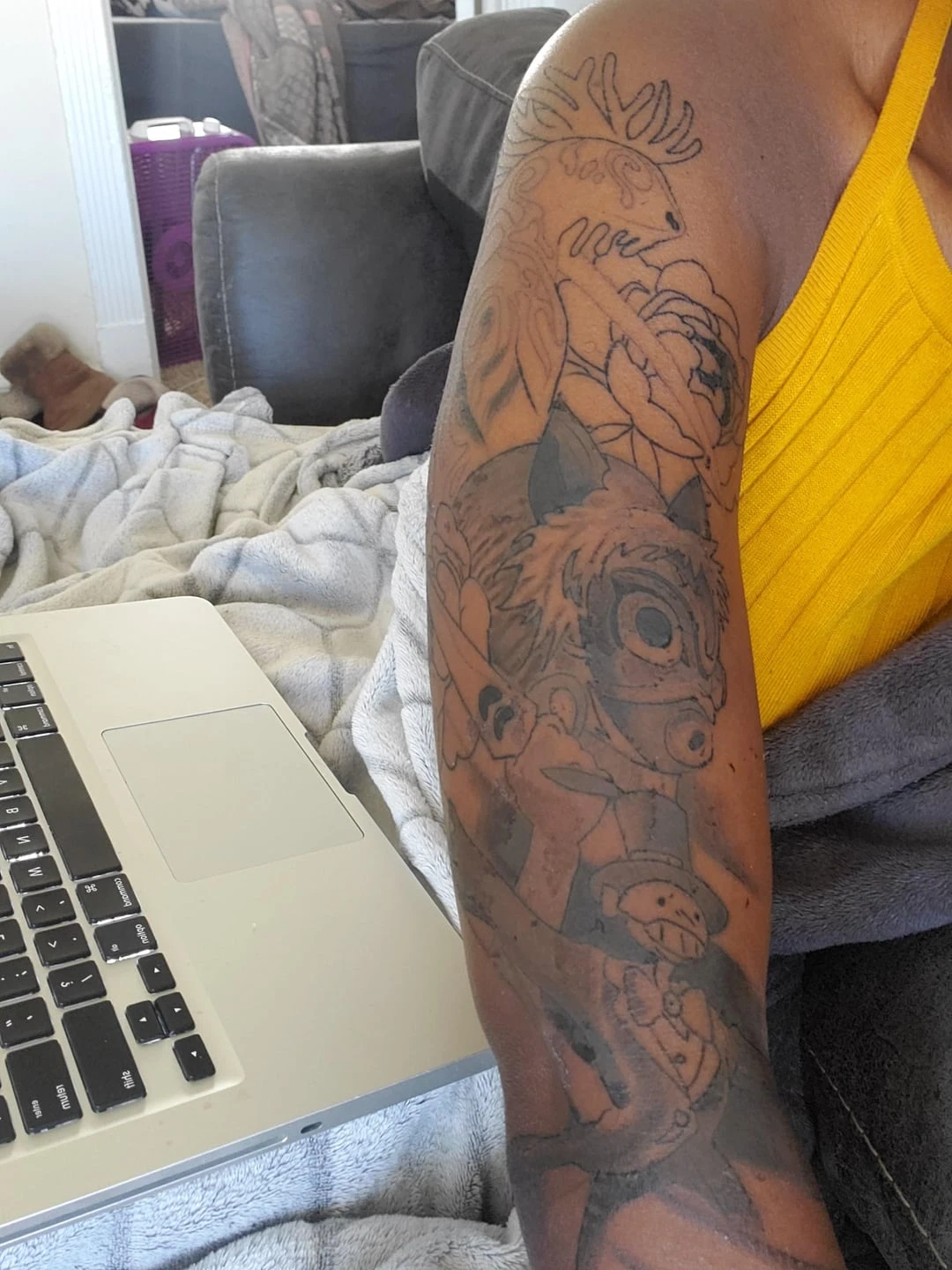
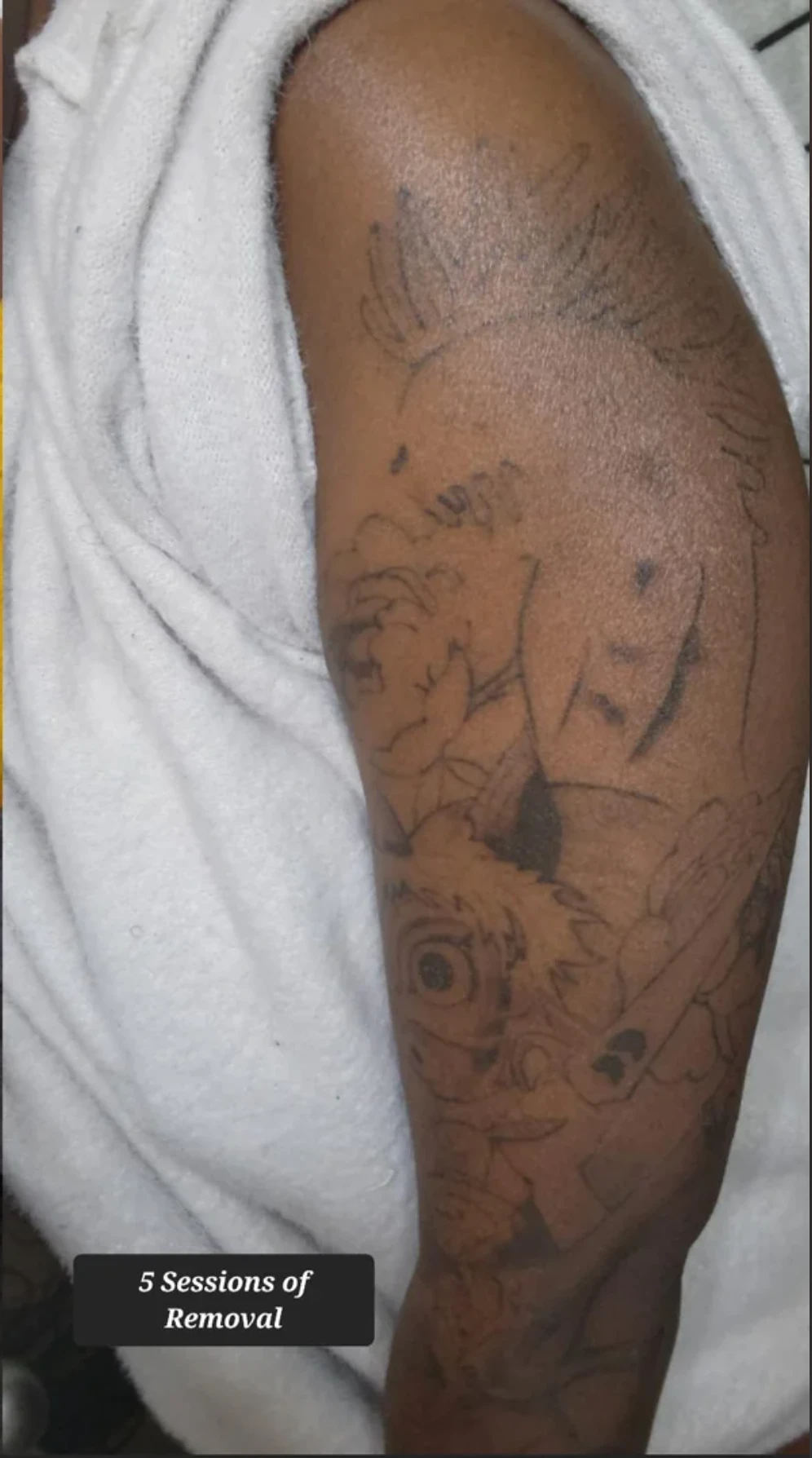
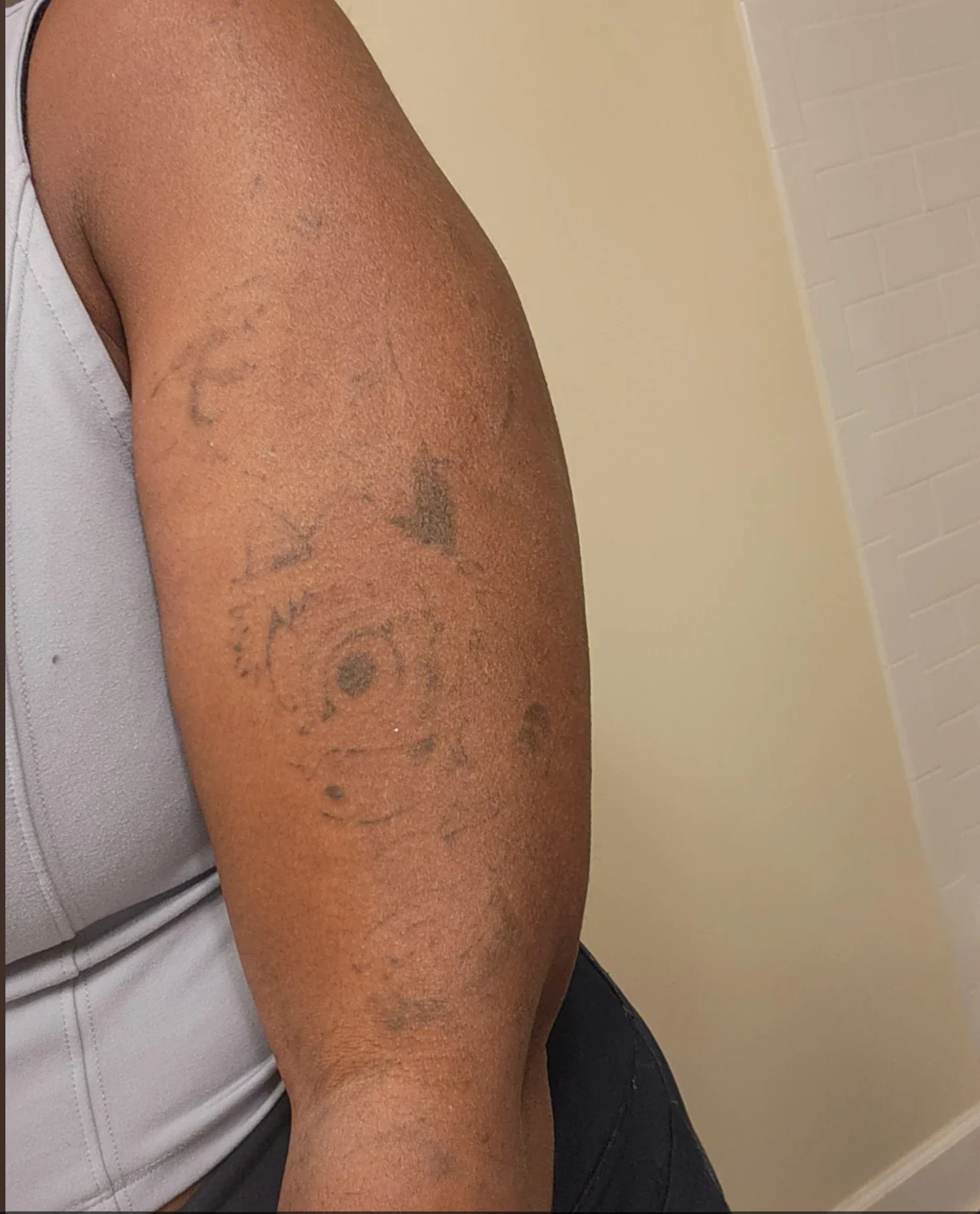
Session 0 (before), session 5, and session 8. Significant clearance visible across the full arm, with more sessions ahead.
Where things stand
75% fading across a large tattoo covering two body segments (upper arm and forearm) after 8 sessions is solid progress. This is not a fast-moving case: the ink was fresh at the start (under a year old), the tattoo is large, and Fitzpatrick Type V skin requires a more conservative approach to avoid permanent pigmentation changes.
The 3 to 4 month spacing between sessions is longer than the typical 6 to 10 week recommendation. For darker skin types, longer intervals are often appropriate. The skin needs more time to recover fully between treatments, and erring on the side of caution reduces the risk of hypopigmentation (permanent lightening) that can occur when melanin-rich skin is exposed to high-energy laser pulses too frequently.
Why PicoWay is the right call here
PicoWay is one of the better options for darker skin types. Its 1064nm wavelength penetrates deep into the dermis without triggering melanin as aggressively as shorter wavelengths (like 532nm, which carries a significantly higher risk of skin lightening on Type IV and above). Its larger spot size (up to 10mm) lets the technician reach deeper ink with lower peak energy per pulse, reducing surface trauma. For a large black tattoo on Type V skin, this is close to the clinical standard of care.
Removery also provides a package structure that often includes sessions to completion, which may explain the $4,230 total as a package purchase rather than an 8-session pay-as-you-go cost. At $529 per session if paid individually, that is within the normal range for PicoWay on a large tattoo.
What comes next
At 75% fading after 8 sessions, more sessions are ahead. The remaining ink will increasingly be the deepest, most encapsulated particles: the ones that survived the first several passes and proved resistant to clearance. This is the phase where progress slows visibly between sessions even as real work is being done. Continuing with the same spacing and being patient with the process is the right call. Rushing intervals to speed things up carries more risk for Type V skin than it does for lighter skin types.