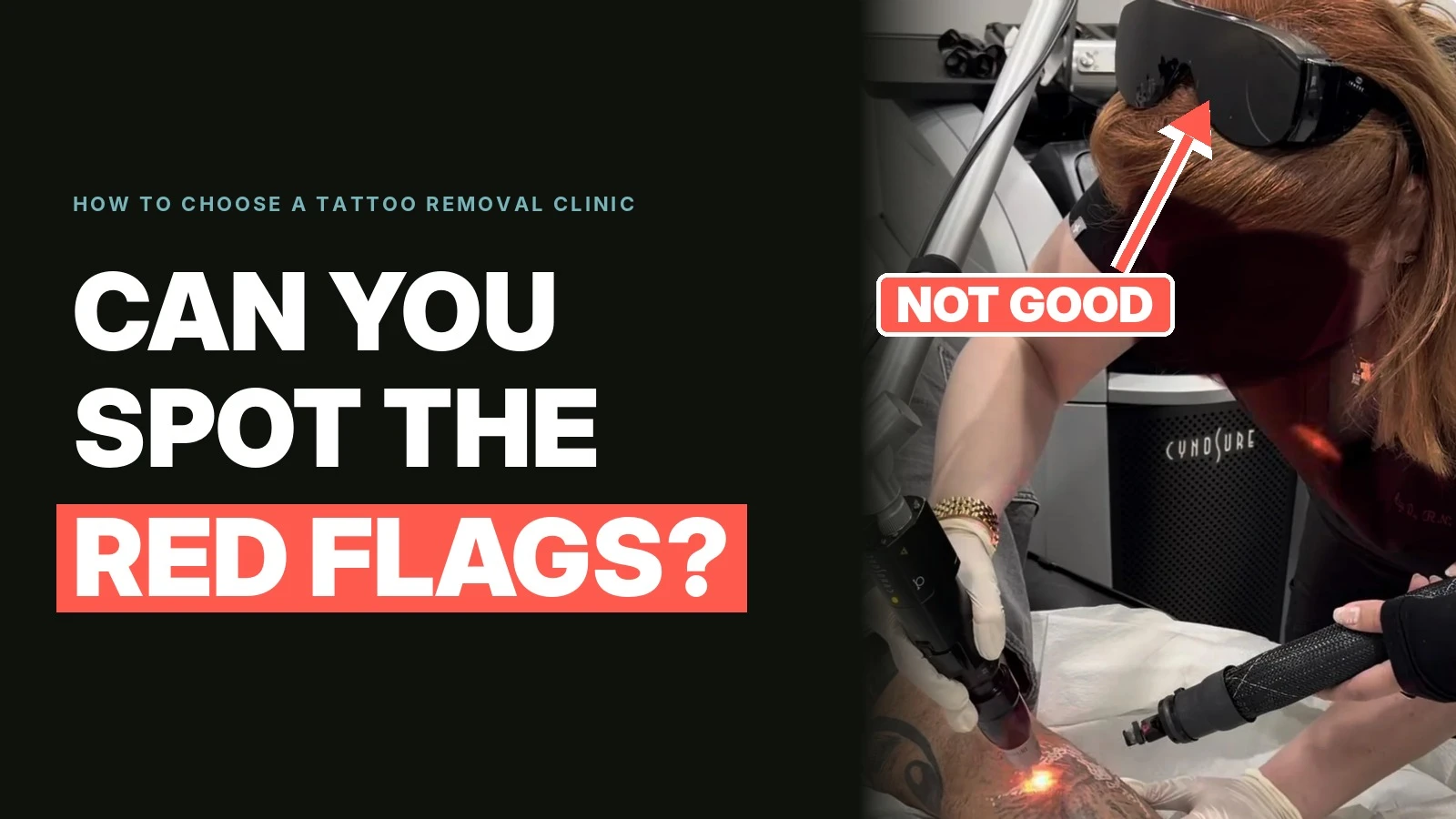
Tattoo removal does hurt, usually more than getting tattooed, but sessions are much quicker. Clinical studies put the pain at roughly 4 to 6 out of 10 on a medical pain scale, and this depends mostly on where the tattoo is on your body, the ink density, and the numbing method. The good news: most patients say each session hurts less than the last as the ink clears, and there are several options like cooling and injectables that can lower the pain substantially.
You've probably heard the classic line: "It feels like a rubber band snapping against your skin." The FDA uses that exact analogy, and so does nearly every clinic website you'll find on Google.
But here's what most of those pages leave out. When researchers actually measured the pain in a clinical review published in the Journal of the European Academy of Dermatology, 84% of patients rated it as moderate to extreme. That's a big (painful) difference from "a rubber band snap" feeling.
The anxiety is real, and it's made worse by all these vague reassurances and conflicting information. You're committing to multiple sessions, each costing hundreds of dollars, and nobody's telling you exactly how much it'll hurt on your specific body part, with your specific ink, using that specific laser. This uncertainty is what stops a lot of people from starting.
This guide closes that gap. You'll get real pain-scale numbers from peer-reviewed studies, every numbing option ranked by effectiveness, a pre-session prep checklist, and a clear aftercare timeline so you know exactly what to expect at every stage.
How Much Does Tattoo Removal REALLY Hurt?
According to most patients, tattoo removal hurts about as much as a sharp, brief sting that most people rate between 4 and 6 out of 10 on a clinical pain scale. The intensity depends on your tattoo's location, ink density, and what numbing method your clinic uses.
The "rubber band snap" analogy you see everywhere online isn't wrong, but it's incomplete. A more accurate description is a concentrated burst of heat and pressure, like hot bacon grease splattering on you, hitting the same spot with each pulse. Each pulse lasts a fraction of a second, and a full session for a medium tattoo takes 30 to 90 seconds.
When researchers from a 2026 study published in Lasers in Medical Science measured pain during Q-switched Ruby laser treatments, patients reported a mean score of 4.6 out of 10 on a visual analog scale (VAS). That's considered mild to moderate. More tellingly, most patients declined topical anesthesia from the second session onward because the pain was manageable enough without it.
On the other hand, a review in the JEADV found that 84% of patients rated their removal pain as moderate to extreme. That's not a contradiction: the VAS average and the percentage of people who found it notably uncomfortable can both be true. The average is moderate, but most people still feel it.
The pain comes from the fracturing of pigment particles and the heat generated as a byproduct of that. For this reason you should be skeptical when some techs suggest lowering the laser's firing speed (the Hz setting) to help with pain. It's mostly a mental game that might work for some people but also extends the treatment total time. It's the same as for people who like to peel a band-aid off slowly, or the grip-and-rip method. Neither changes how much total discomfort you experience. It's always more painful in dense spots. Not that a light gray wash or your last session aren't painful, just a bit more tolerable.
Does Tattoo Removal Hurt More Than Getting the Tattoo?
Tattoo removal does hurt more than getting a tattoo but removal sessions are much shorter. For example, for a medium tattoo, a laser session lasts 30 to 90 seconds, while sitting to get tattooed can take hours. That's the trade-off.
To give a concrete example, getting a half-sleeve might have taken four hours. Removing it takes under two minutes per session, spread across 6 to 12 visits spaced weeks apart.
So when someone says "it hurts worse than getting it," they're right about the moment but wrong about the overall experience. The cumulative discomfort of removal is far less than sitting for the tattoo in the first place.
However, no controlled study has ever directly compared the pain of getting and removing the same tattoo on the same person. The closest research is a 2020 study in the International Journal of Environmental Research and Public Health that measured pain during tattooing and found that duration, bleeding, and stress levels were the biggest drivers of discomfort.
If you want to better understand the mechanics behind why the laser pain can be so intense, our guide on how laser tattoo removal works breaks down the removal process step by step.
What Makes Tattoo Removal Hurt More (or Less)?
Not all removal sessions feel the same. Four main variables shift your pain level, sometimes significantly.
Body location is the biggest factor. Bony, thin-skinned, nerve-dense areas hurt the most: ribs, ankles, wrists, feet, hands, spine, and neck. Fleshy, muscular areas are more tolerable: thighs, upper arms, calves, and most of the back. The places that hurt the most to tattoo are generally the ones that will hurt more to remove.
Ink density and layering can multiply your discomfort. Dense spots, solid blackwork, and tribal designs have more pigment per square inch, which means the laser has more material to fracture in each pulse. Coverups are especially intense since there are two layers of ink in the skin. If you're wondering whether your tattoo can be completely removed, ink density is one of the biggest factors in how many sessions (and how much total pain) you're looking at.
Ink color affects how much energy your skin absorbs. Darker inks (black, dark blue, dark green) absorb more laser energy per pulse, which can make the sensation sharper. Lighter colors like yellow and white are harder to clear but can feel slightly less intense per pulse.
Tattoo age can work in your favor, but it's not guaranteed. Older tattoos have faded naturally over time, which can make them less painful to treat. But modern inks and machines deposit pigment more densely than older methods, so don't assume age alone means an easy ride.
Then there's the technology factor no one wants to explain clearly…
In a clinical trial published in Plastic and Reconstructive Surgery patients reported lower pain with a picosecond laser compared to nanosecond. A separate split-study in the JEADV confirmed this pattern: mean pain scores of 4.0 for picosecond 532nm, 4.9 for picosecond 1064nm, and 5.8 for nanosecond 694nm. If your clinic offers picosecond technology, it's likely to be somewhat less painful per session.
How to reduce tattoo removal pain
Clinics typically offer three pain relief options for tattoo removal:
- Topical numbing creams
- Cooling devices
- Injectable local anesthetics
Of these three, injectable anesthesia is the most effective, cold-air cooling is the most common, and topical creams are the most accessible but least powerful.
Topical numbing creams are the entry-level option. Products like EMLA (lidocaine/prilocaine) or prescription-strength lidocaine/tetracaine formulas are applied 30 to 60 minutes before your session. They help, but they have limits. In a double-blind, placebo-controlled study, patients using an S-Caine peel (lidocaine 7%/tetracaine 7%) scored an average of 42mm on a 100mm pain scale, compared to 66mm for placebo (p=.001). That's a real reduction, but only 50% of patients got what researchers classified as "adequate" relief. A separate RCT in the British Journal of Dermatology tested two cream formulations head-to-head and found that 60% of patients preferred lidocaine/prilocaine over lidocaine/tetracaine.
Cold-air cooling is the most widely used method in clinics. Devices like the Zimmer Cryo blow air as cold as -30°C directly onto your skin before, during, and after each laser pulse. Most clinics include this at no extra charge, letting the patients hold the nozzle themselves.
Injectable local anesthetics are the most effective option, but not every clinic offers them. A physician injects lidocaine (sometimes with epinephrine) directly into the treatment area. In one clinical presentation reported by PM360, patients scored an average of 5.4 out of 10 with injectable anesthesia versus 9.1 with topical cream alone. That's a massive difference. The same data showed nitrous oxide (laughing gas) scored even lower at 2.6. Keep in mind this comes from a conference presentation, not a full peer-reviewed paper, so treat the exact numbers with some caution, but the directional takeaway is clear: injections substantially outperform creams.
There's also the Describe patch (a perfluorodecalin-infused optical clearing patch). A pivotal trial in Lasers in Surgery and Medicine showed it allows clinics to do more laser passes per session with less swelling. But it doesn't have established pain-reduction numbers in humans, so don't confuse "faster sessions" with "less painful sessions."
Ask your clinic these questions before you book:
- What numbing options do you offer?
- Do you use cold-air cooling during treatment?
- Is injectable anesthesia available, and does it cost extra?
Since pain is a big deal, this is worth asking about before comparing tattoo removal costs across providers. The cheapest session isn't always the best value if it comes with no numbing at all.
Before Your Session: A Prep Checklist to Reduce Pain
What you do in the 24 to 72 hours before your appointment can meaningfully affect how much pain you feel. Here's what the evidence supports.
Skip alcohol and caffeine for at least 24 hours before your session. Alcohol thins your blood and increases bruising. Caffeine dehydrates you and can heighten pain sensitivity. Neither helps.
Stop NSAIDs and blood-thinning supplements 48 to 72 hours before treatment. This means ibuprofen (Advil, Motrin), aspirin, naproxen (Aleve), fish oil, and high-dose vitamin E. These increase bruising and can make the treated area more tender afterward. If you're on prescribed blood thinners, do not stop them without talking to your doctor first. Acetaminophen (Tylenol) is generally safe to take before your session.
Hydrate well and get a good night's sleep. Dehydrated skin is more sensitive. Fatigue lowers your pain tolerance. Neither of these costs you anything, and both make a noticeable difference.
Ask your clinic about numbing options ahead of time. If you know you want injectable anesthesia or a specific numbing cream, confirm it's available and whether you need to arrive early for application time. Some clinics require 30 to 60 minutes of prep for topical numbing, so this is worth sorting out before you show up.
Mentally prepare for a brief, intense experience. Knowing exactly what to expect (a sharp sting that lasts seconds, not minutes) helps reduce anxiety. And lower anxiety means lower perceived pain.
How Long Does the Pain Last After a Session?
The intense laser sting fades within minutes of leaving the treatment room. What follows feels like a mild to moderate sunburn for the next 24 to 48 hours, sometimes with swelling or blistering that takes one to two weeks to fully resolve.
Here's what the recovery timeline typically looks like:
In the first few minutes after treatment, you'll feel heat, see redness, and may notice a white "frosting" on the skin. This is a normal temporary reaction from the laser interacting with the ink and fades within 10 to 20 minutes.
Over the next 8 to 72 hours, the treated area will feel like a sunburn. Blisters, crusts, or small scabs may develop. Blistering is normal and doesn't mean something went wrong. Don't pop them.
In the 1 to 2 weeks after, any blisters and scabs will dry up and flake off naturally. Most patients can return to normal routines within a day or two. Avoid pools, saunas, and heavy sweating during this period, and apply SPF 50+ sunscreen once the skin has closed.
Full skin recovery between sessions takes 4 to 8 weeks. This is the time your body's immune system needs to flush out the fragmented ink particles. It's also why sessions are spaced 8 to 12 weeks apart. You can see what this healing progression looks like in our before-and-after gallery.
Contact your provider if you experience any of these:
- Increasing pain, redness, or swelling after the first 48 hours
- Pus or thick yellow/green discharge
- Red streaks spreading from the treatment area
- Fever above 100.4°F; or a foul smell.
These are signs of possible infection, not normal healing. When in doubt, call your clinic.
The Good News: Each Session Hurts Less Than the Last
This is the part most first-timers don't hear enough: your worst session is almost always your first one.
With each treatment, the laser will have less ink to target next time. Less pigment absorbs less energy, which generates less heat and causes less pain. The 2026 Lasers in Medical Science study noted that most patients declined topical anesthesia from the second session onward because the pain had become manageable without it.
Dense spots early on are the peak. Not that a light gray wash or your final sessions aren't painful, just noticeably more tolerable. By the time you're three or four sessions in, the difference is real.
This is also worth considering if you're weighing whether the process is worth it at all. Our comparison of removal vs cover-up can help you decide, and understanding how long removal takes gives you a clearer picture of the full commitment.
Conclusion
Tattoo removal pain is real, but it's brief, predictable, and manageable once you know what to expect. And it genuinely gets easier every session as the ink clears.
The best thing you can do is show up prepared. Skip the alcohol and NSAIDs beforehand, ask your clinic about numbing options before you book, and know that your hardest session is your first one.
Ready to start? Search for clinics near you and make sure your provider offers the pain management options that matter to you.
Frequently Asked Questions
What is the pain scale for tattoo removal?
Clinics and researchers use a 0-to-10 Visual Analog Scale (VAS) to measure tattoo removal pain. On this scale, 0 is no pain and 10 is the worst pain imaginable. Most clinical studies report tattoo removal in the 4 to 6 range, which falls in the "mild to moderate" category. For context, a sprained ankle typically scores around 5 to 7, and a dental filling without anesthesia scores about 4 to 6.
How long does pain last after laser tattoo removal?
The sharp laser sting stops within minutes of leaving the clinic. What follows is a sunburn-like warmth for 24 to 48 hours. If blisters form (which is normal), they typically resolve within one to two weeks. Full skin recovery between sessions takes 4 to 8 weeks, which is why appointments are spaced at least six weeks apart.
Can I take painkillers before my tattoo removal session?
Acetaminophen (Tylenol) is generally safe to take before your appointment. Avoid ibuprofen, aspirin, naproxen, and fish oil for 48 to 72 hours beforehand because they thin the blood and increase bruising. If you take prescribed blood thinners, never stop them without talking to your doctor first.
Does slowing down the laser Hz setting reduce pain?
Probably not in any meaningful way. Your tech may tell you that lowering the Hz (the laser's firing speed) helps with pain. The reality is that this is likely a mental game that works for some people but extends treatment time significantly. The pain comes from the fracturing of pigment particles and the heat generated as a byproduct, not from how fast the pulses fire. It's the difference between peeling a band-aid off slowly versus ripping it off: different experience, same total discomfort.
Does removing a tattoo over scar tissue hurt more?
It can, yes. Scarred skin has altered nerve responses and denser tissue structure, which may make treatment feel different and often more sensitive. Ink trapped under scar tissue is also harder for the laser to reach, which can mean higher energy settings and potentially more sessions. If your tattoo has scar tissue, mention it during your consultation so the technician can adjust their approach.
Is the first tattoo removal session the most painful?
For most people, yes. Your first session targets the highest concentration of ink, which means the laser has the most material to break apart. More pigment absorbs more energy, generating more heat and a stronger sensation. By later sessions, the ink is significantly thinner, and most patients report declining topical numbing because the discomfort has become manageable on its own.
Sources
- Kluger N. "Tattoo complications and tattoo removal: state of the art." Journal of the European Academy of Dermatology and Venereology, 2017. DOI: 10.1111/jdv.14124
- Levi A et al. "Removal of radiation-related tattoos among breast cancer survivors using a 20-nanosecond Q-switched Ruby laser." Lasers in Medical Science, 2026. DOI: 10.1007/s10103-026-04798-4
- Alabdulrazzaq H et al. "755-nm Picosecond vs. Nanosecond Alexandrite Lasers for Tattoo Removal: A Randomized, Split-Tattoo Clinical Trial." Plastic and Reconstructive Surgery, 2026. DOI: 10.1097/PRS.0000000000012958
- Bäumler W et al. "The efficacy and the adverse reactions of laser-assisted tattoo removal: a prospective split study using nanosecond and picosecond lasers." Journal of the European Academy of Dermatology and Venereology, 2022. DOI: 10.1111/jdv.17674
- Chen JZ et al. "Evaluation of the S-Caine Peel for laser-assisted tattoo removal." Dermatologic Surgery, 2005. PMID: 15841627
- Greveling K et al. "Comparison of lidocaine/tetracaine cream and lidocaine/prilocaine cream for local anaesthesia during laser treatment of acne keloidalis nuchae and tattoo removal: results of two randomized controlled trials." British Journal of Dermatology, 2017. DOI: 10.1111/bjd.14626
- Biesman BS, Costner C. "Evaluation of a transparent perfluorodecalin-infused patch as an adjunct to laser-assisted tattoo removal: a pivotal trial." Lasers in Surgery and Medicine, 2017. PMID: 28319270
- Pesqué D, Serra-Baldrich E et al. "Gender Differences in Subjective Pain Perception during and after Tattooing." International Journal of Environmental Research and Public Health, 2020. PMC7767267